


Hyundai TUCSON vs. SANTA FE: Which SUV Is the Right Fit for Your North Texas Lifestyle?
Weighing up the Hyundai TUCSON vs. SANTA FE? Whether you’re zipping through downtown McKinney traffic or hauling the kids to weekend sports tournaments across North Texas, each vehicle shines differently. Let our team at Huffines Hyundai McKinney break down the details to help you find your perfect match.
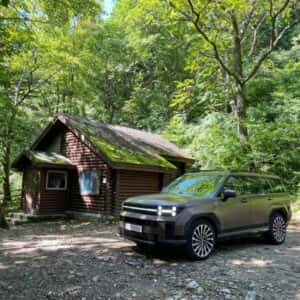
Photo by Hyundai Motor Group : https://www.pexels.com/photo/hyundai-santa-fe-near-house-in-forest-18365525/
Understanding the Popularity of Hyundai SUVs
Out of 38 brands, Hyundai just snagged the 2025 Best SUV Brand title from U.S. News & World Report, and the TUCSON has won Best Compact SUV for Families for four straight years. You’re in good company if you’re checking out a Hyundai SUV.
It’s not hard to see the appeal. Hyundai’s five-year/60,000-mile basic warranty and 10-year/100,000-mile powertrain coverage are ideal for driving you through McKinney’s brutal summers and Dallas-Fort Worth traffic jams.
Design and Aesthetics
The SANTA FE, at 190.2 inches long, is a little bigger than the TUCSON at 182.7 inches. Both feature LED headlights and daytime running lights. Regarding wheels, the TUCSON has 17-inch or 18-inch alloys, depending on trim, while the SANTA FE’s trims include 18-inch, 20-inch, or 21-inch alloys.
The SANTA FE offers more luxury inside than the TUCSON, with optional Nappa leather and heated and ventilated front seats. For extra style, the SANTA FE also includes a standard leather-wrapped steering wheel and sleek headliner.
Performance and Engine Options
The TUCSON uses a 2.5-liter four-cylinder producing 187 horsepower and 178 lb-ft of torque, paired with an eight-speed automatic transmission. The SANTA FE steps up with a turbocharged 2.5-liter four-cylinder delivering 277 horsepower and 311 lb-ft of torque, and an eight-speed dual-clutch automatic transmission. The hybrid versions feature a 1.6-liter turbo system for 238 (SANTA FE) or 242 horsepower (TUCSON).
Regarding ride quality, the TUCSON offers a nimble, quiet drive, while the SANTA FE’s power gives you greater acceleration. The SANTA FE tows up to 4,500 pounds, but the TUCSON’s 2,000-pound capacity means you’re still ready for road trips.
Safety Features and Ratings
Regarding safety, Hyundai has you covered, regardless of which SUV you choose.
Standard Safety Technologies
The TUCSON and the SANTA FE include Hyundai’s SmartSense safety features as standard: Safe Exit Warning/Assist, rear occupant alert, Driver Attention Warning, adaptive cruise control, and lane-keep assist. Collision prevention systems monitor for cars, pedestrians, and cyclists, including when you’re turning left.
Crash Test Ratings and Accolades
The 2025 TUCSON and 2025 SANTA FE earned a Top Safety Pick+ rating from the Insurance Institute for Highway Safety. The 2025 SANTA FE also holds a four-star National Highway Traffic Safety Administration rating, with perfect side crash scores.
Interior Space and Comfort
This is where the differences between the Hyundai SANTA FE and TUCSON emerge.
Seating Capacity and Comfort Levels
The TUCSON seats five people, while the SANTA FE, with its standard third row, fits up to seven. This difference matters if you have more than three kids.
The SANTA FE gives front passengers 44.4 inches of legroom and at least 40.2 inches of headroom, while the TUCSON provides 41.4 inches of legroom and 40.1 inches of headroom. In the second row, the SANTA FE edges ahead again with 42.3 inches of legroom to the TUCSON’s 41.3 inches. The SANTA FE’s third row provides 30 inches of legroom.
Cargo Space
Cargo space depends on seat configuration. The TUCSON offers 38.7 cubic feet behind the second row. Behind the third row, the SANTA FE gives you 14.6 cubic feet, but with the third row folded, that goes up to 40.5 cubic feet. With the second row folded, the Hyundai TUCSON’s cargo space of 80.3 cubic feet beats the SANTA FE’s 79.6 cubic feet.
Technology and Infotainment
Tech-wise, these SUVs are twins in many ways. Both sport 12.3-inch touch screens with sharp graphics and quick responses. The interface looks modern without feeling overwhelming, and wireless Apple CarPlay and Android Auto are standard — no more fumbling with cables to use maps or play your Spotify playlist. The systems understand voice commands well so that you can focus on McKinney’s busy roads.
The SANTA FE does add a few tech perks, including dual wireless phone chargers, Hyundai’s newer Digital Key 2 system, and an available digital rearview mirror. The TUCSON offers standard wireless charging, too, but just for one phone at a time.
Fuel Economy: Efficiency Matters
While both SUVs offer decent efficiency, there are differences you’ll want to consider. The front-wheel-drive (FWD) TUCSON achieves 25 mpg in the city, 33 mpg on the highway, and 28 mpg combined, which drops to 24/30/26 mpg with all-wheel drive (AWD). The SANTA FE’s stronger engine takes more gas, reaching 20/29/24 mpg with FWD and 20/28/23 mpg with AWD.
Hybrids dramatically reduce fuel costs. The SANTA FE Hybrid with FWD hits 36/35/36 mpg, while AWD versions manage 35/34/34 mpg. The TUCSON Hybrid with AWD delivers 35/35/35 mpg. If you’re a daily Plano or Dallas commuter, these savings add up to hundreds yearly and could offset the hybrid’s higher price.
Pricing and Value for Money
The TUCSON SE starts at $28,705, compared to $34,300 for the SANTA FE SE. The SANTA FE’s five trims (SE, SEL, XRT, Limited, Calligraphy) top out at $46,850, while the SEL Hybrid begins at $37,800.
The hybrid trims top out at $41,295 for the TUCSON Limited Hybrid AWD and $47,850 for the SANTA FE Calligraphy Hybrid AWD. All models include identical warranty coverage (five-year/60,000-mile basic, 10-year/100,000-mile powertrain) and boast similar J. D. Power reliability scores (85/100 for the TUCSON, 79/100 for the SANTA FE).
Target Audience: Who Should Choose the TUCSON or the SANTA FE?
The TUCSON fits budget-minded McKinney buyers who want good gas mileage and city-friendly size. With seating for five, it’s perfect for singles, couples, or families with one or two kids. First-time SUV owners often love the TUCSON because it drives more like a car while sitting higher, offering better visibility.
The SANTA FE works better for bigger families who need that third row for kids, carpooling, or frequent guests. Its stronger engine and 4,500-pound maximum towing capacity make it ideal for active families with boats, Jet Skis, or camping trailers. If you’re a growing family, you might also choose the SANTA FE to avoid upgrading as more kids (or pets) join the crew.
Find Your Perfect Hyundai SUV Match With Huffines Hyundai McKinney
Which is better, the Hyundai TUCSON or the SANTA FE? It depends on your needs. The TUCSON offers better fuel economy, lower pricing, and nimble handling for daily McKinney driving. The SANTA FE provides extra seating, greater towing capability, and luxury touches. Both deliver solid reliability, excellent warranties, and modern safety tech.
The real question is which is right for you, and at Huffines Hyundai McKinney, we’re here to help you decide. Get in touch today to arrange a test-drive — your perfect match awaits.
0 comment(s) so far on Hyundai TUCSON vs. SANTA FE: Which SUV Is the Right Fit for Your North Texas Lifestyle?